

Introduction
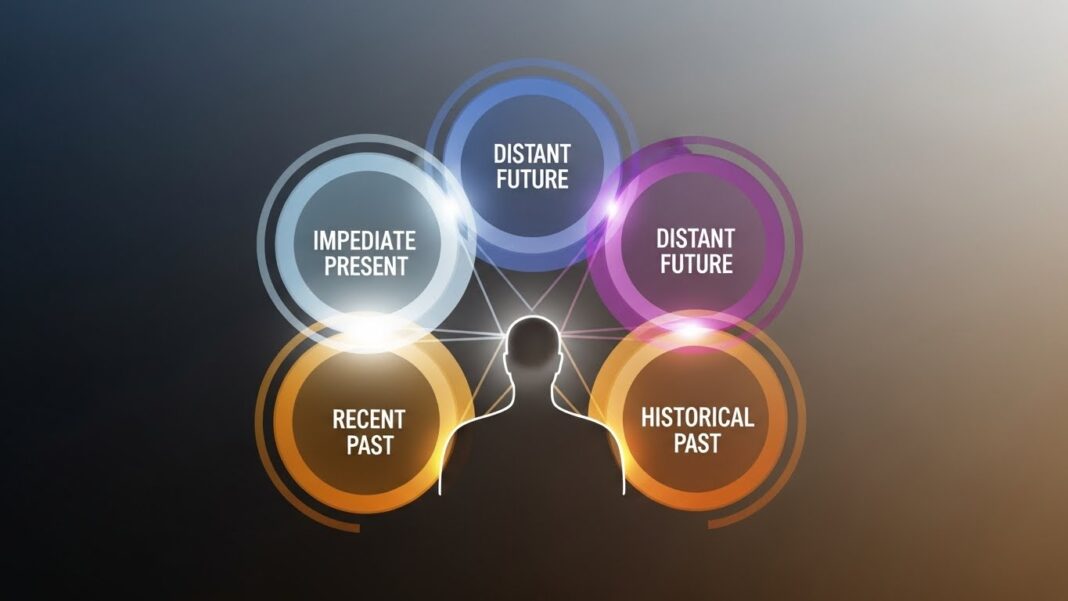
In our increasingly complex world, the way we perceive and interact with time has become more nuanced than ever before. Pentachronism, a relatively obscure yet profoundly relevant concept, refers to the simultaneous experience or consideration of five distinct temporal perspectives. Unlike the simple linear progression of past, present, and future that most of us learned in school, pentachronism acknowledges that human consciousness operates across multiple time horizons at once. This five-fold temporal framework encompasses the immediate present, the near future, the distant future, the recent past, and the historical past—all interacting to shape our decisions, behaviors, and worldview.
The term pentachronism derives from the Greek words “penta” (meaning five) and “chronos” (meaning time), and while it hasn’t yet entered mainstream vocabulary, its implications are everywhere. Every time you check your smartphone while planning tomorrow’s meeting, remembering last week’s conversation, and considering your five-year career goals, you’re engaging in pentachronistic thinking. Business leaders use this multi-temporal perspective when balancing quarterly earnings reports with long-term strategic vision. Urban planners employ pentachronism when designing cities that honor historical heritage while accommodating present needs and anticipating future growth.
What makes pentachronism particularly relevant today is our unprecedented access to information across all time frames. Digital technology has collapsed temporal boundaries, allowing us to simultaneously stream live events, access historical archives, and forecast future trends with sophisticated algorithms. This temporal compression has made pentachronistic awareness not just useful but essential for navigating modern life. Whether you’re an entrepreneur launching a startup, a parent raising children, or a policymaker crafting legislation, understanding how these five temporal dimensions interact can dramatically improve your effectiveness. This article explores the depths of pentachronism, examining its theoretical foundations, practical applications, and profound implications for how we live, work, and plan in an increasingly complex temporal landscape.
The Five Temporal Dimensions of Pentachronism
At the heart of pentachronism lies a framework that divides our temporal awareness into five distinct yet interconnected zones. The immediate present represents our direct, sensory experience of the current moment—what you’re reading right now, the chair supporting you, the ambient sounds around you. This dimension anchors us in reality and provides the foundation for all other temporal awareness. The near future extends from moments ahead to roughly the next few months, encompassing everything from your next meal to upcoming appointments and short-term goals. This time horizon dominates much of our daily planning and decision-making, influencing everything from what groceries we buy to which tasks we prioritize at work.
The distant future stretches beyond several months into years and decades ahead, containing our long-term aspirations, retirement plans, and legacy considerations. Meanwhile, the recent past covers memories from moments ago back through the last several months—yesterday’s conversation, last week’s project, last month’s vacation. This temporal zone provides immediate context for present decisions and helps us learn from recent experiences. Finally, the historical past encompasses everything before the recent past, including childhood memories, cultural history, and ancestral heritage. This deepest temporal dimension shapes our identity, values, and understanding of how we arrived at the present moment. Together, these five dimensions create a comprehensive temporal framework that pentachronism uses to analyze how humans actually experience and navigate time.
Read More: Payday Loans EloanWarehouse
Historical Context: How Pentachronism Emerged as a Concept
The intellectual roots of pentachronism can be traced back to mid-20th century philosophy and psychology, particularly in the works of phenomenologists who questioned simplified notions of temporal experience. French philosopher Maurice Merleau-Ponty argued that consciousness exists as a “temporal thickness” rather than a knife-edge present, suggesting that we inhabit multiple time zones simultaneously. German philosopher Martin Heidegger’s concept of “Being-toward-death” implied that humans constantly project themselves into future possibilities while remaining grounded in historical circumstances. These philosophical foundations laid the groundwork for more systematic theories of multi-temporal consciousness, though the specific five-fold framework of pentachronism emerged later from interdisciplinary synthesis.
The explicit articulation of pentachronism as a distinct concept developed through convergence of insights from anthropology, organizational theory, and futures studies during the 1980s and 1990s. Anthropologists studying how different cultures conceptualize time noticed that many non-Western societies naturally operate with more complex temporal frameworks than the simple linear model dominant in industrialized nations. Pacific Islander cultures, for instance, often maintain detailed genealogical knowledge spanning dozens of generations while simultaneously planning seasonal activities and maintaining acute present-moment awareness. These cross-cultural observations, combined with research in organizational psychology showing that successful companies balance multiple time horizons, gradually coalesced into the pentachronistic framework. By recognizing five distinct temporal dimensions rather than three, researchers could more accurately describe how humans actually navigate their temporal environment in both traditional and modern contexts.
Pentachronism in Cognitive Psychology and Neuroscience
Modern cognitive psychology has provided substantial evidence supporting the pentachronistic model of temporal awareness. Research conducted at Stanford University in 2018 demonstrated that individuals make markedly different decisions depending on which temporal frame dominates their thinking at the moment of choice. When primed to think about immediate present needs, participants showed preference for instant gratification, but when asked to consider both near-future and distant-future consequences simultaneously, their decision-making became more balanced and strategic. Brain imaging studies have revealed that contemplating different temporal horizons activates distinct neural networks, with the prefrontal cortex showing particular sensitivity to future-oriented thinking while the hippocampus engages more heavily when processing past information. These findings suggest that pentachronism reflects genuine neurological architecture rather than mere theoretical abstraction.
The implications of this neuroscience research for understanding pentachronism are profound. A 2021 study published in Nature Neuroscience found that individuals with stronger connections between brain regions associated with different temporal processing showed better life outcomes across multiple metrics, including financial stability, relationship satisfaction, and career achievement. This suggests that the ability to integrate information across all five temporal dimensions—what we might call pentachronistic competence—represents a genuine cognitive skill that can be developed and strengthened. Meditation practices, strategic planning exercises, and reflective journaling have all shown promise in enhancing this multi-temporal awareness. As neuroscience continues mapping the brain’s temporal processing systems, we’re gaining increasingly sophisticated understanding of how pentachronism operates at the biological level and how we might optimize our natural capacity for multi-temporal thinking.
Practical Applications of Pentachronism in Business Strategy
In the business world, pentachronism offers a powerful framework for strategic planning and decision-making that addresses one of management’s most persistent challenges: balancing short-term pressures with long-term vision. Companies that explicitly adopt pentachronistic thinking create separate but integrated planning processes for each temporal dimension. Amazon provides a compelling example, with Jeff Bezos famously maintaining focus on immediate customer experience, quarterly financial targets, annual innovation goals, three-year strategic initiatives, and a decades-long vision of becoming “Earth’s most customer-centric company.” This multi-temporal approach allowed Amazon to sacrifice short-term profitability in its early years while building infrastructure and capabilities that would dominate the market for decades to come.
The practical implementation of pentachronism in business typically involves creating distinct metrics, meetings, and accountability structures for each temporal horizon. Weekly team meetings address immediate present operations and near-future tactics, monthly reviews examine recent past performance and adjust near-term strategies, quarterly board meetings balance current results with annual goals, and annual retreats focus on distant future positioning and historical trajectory analysis. Companies like Patagonia have used this pentachronistic framework to build sustainable business models that honor their environmental heritage, meet current customer needs, maintain near-term profitability, and invest in long-term ecological solutions. Research by McKinsey & Company found that organizations consciously managing multiple time horizons simultaneously—essentially practicing pentachronism—outperformed their peers by an average of 47% in shareholder returns over ten-year periods, demonstrating that this multi-temporal approach delivers tangible competitive advantages.
Pentachronism and Personal Life Planning
Beyond corporate strategy, pentachronism offers invaluable tools for individuals seeking to live more intentional, balanced lives. Personal finance provides an obvious application, where pentachronistic thinking helps people simultaneously manage daily expenses, plan for upcoming purchases, save for major near-future goals like home down payments, invest for distant retirement needs, and honor financial lessons from their personal history. Financial advisors increasingly recommend what they call “bucketing strategies” that essentially operationalize pentachronism by dividing assets across multiple temporal horizons—emergency funds for immediate needs, short-term savings for near-future goals, medium-term investments for five-to-ten-year objectives, and long-term retirement accounts for distant future security.
The pentachronistic framework proves equally valuable in personal relationships, health management, and skill development. Parents practicing pentachronism balance meeting children’s immediate needs with teaching lessons for their near-term development, modeling values for their long-term character formation, learning from recent parenting mistakes, and drawing on historical family wisdom passed through generations. In health and wellness, pentachronism helps individuals make choices that feel satisfying in the present moment while supporting near-future energy levels, protecting distant-future vitality, learning from recent lifestyle experiments, and honoring constitutional tendencies rooted in personal history. A 2020 study in the Journal of Applied Psychology found that individuals who consciously considered all five temporal dimensions when making major life decisions reported 34% higher satisfaction with those decisions three years later compared to those who focused primarily on immediate circumstances, suggesting that pentachronistic thinking contributes significantly to long-term wellbeing and life satisfaction.
Cultural Variations in Pentachronistic Thinking
Different cultures around the world demonstrate fascinating variations in how they weight and integrate the five temporal dimensions of pentachronism. Western industrialized societies, particularly in the United States, tend to emphasize the near future and immediate present, with cultural narratives celebrating innovation, disruption, and forward momentum while sometimes neglecting historical consciousness. This temporal orientation manifests in everything from business practices that prioritize quarterly earnings to educational systems that focus on preparing students for “future-ready” careers rather than deep historical understanding. The result is a culture that excels at rapid adaptation and near-term optimization but sometimes struggles with sustaining long-term commitments or maintaining connection to ancestral wisdom.
In contrast, many Asian and Indigenous cultures demonstrate more balanced pentachronistic frameworks that give substantial weight to both historical past and distant future dimensions. Japanese business culture, for instance, includes the concept of “sanpo-yoshi” (three-way satisfaction), which considers obligations to past generations, present stakeholders, and future descendants simultaneously. Several Japanese companies have operated continuously for over 1,000 years by maintaining this multi-generational temporal perspective. Similarly, the Iroquois Confederacy operated under the “Seventh Generation Principle,” which required leaders to consider how their decisions would affect descendants seven generations into the future—a temporal horizon of approximately 150 years. These cultural variations in pentachronism reveal that while the five temporal dimensions may be universal features of human consciousness, the relative attention and value assigned to each dimension varies significantly across societies, with profound implications for everything from environmental stewardship to social cohesion and economic sustainability.
The Digital Age and Evolving Pentachronism
The digital revolution has fundamentally transformed how we experience and navigate pentachronism, creating both unprecedented opportunities and novel challenges for multi-temporal awareness. Smartphones and cloud computing have made information from all five temporal dimensions instantly accessible—we can photograph the present moment while simultaneously checking tomorrow’s calendar, reviewing last month’s photos, researching historical facts, and projecting future scenarios using planning apps. Social media platforms amplify this temporal compression, allowing us to broadcast our immediate present to friends while scrolling through their recent past and making plans for near-future gatherings. This technological enhancement of pentachronistic capability has enabled remarkable feats of coordination, learning, and planning that would have been impossible in previous eras.
However, digital technology also threatens to distort healthy pentachronism by overwhelming the immediate present and collapsing all temporal horizons into an endless “now” of notifications and updates. Research published in 2022 by the American Psychological Association found that excessive smartphone use correlates with decreased ability to maintain distant future focus and historical perspective, as constant interruptions fragment attention and prevent the sustained reflection necessary for deep temporal thinking. The infinite scroll of social media feeds creates what some researchers call “temporal vertigo”—a disorienting sense that all time periods exist simultaneously without clear hierarchy or relationship. Paradoxically, the same tools that could enhance pentachronistic awareness often undermine it by training our attention toward immediate reactions and near-term validation while neglecting the contemplative processes that integrate all five temporal dimensions into coherent understanding. Successfully navigating pentachronism in the digital age requires conscious practices to protect space for each temporal dimension rather than allowing technology to collapse them all into undifferentiated urgency.
Developing Your Pentachronistic Awareness
Cultivating stronger pentachronistic awareness begins with simple practices that help you consciously engage with each of the five temporal dimensions throughout your day. Start by creating a “temporal audit” of your typical week, tracking how much mental energy and time you devote to each dimension. Most people discover they’re heavily weighted toward immediate present reactions and near-future concerns while neglecting distant future planning and historical reflection. Once you’ve identified your temporal blind spots, you can implement targeted practices to strengthen weaker dimensions. For distant future thinking, try writing a detailed letter to yourself ten years from now or creating a vivid mental image of your life at age 80. For historical past connection, interview older family members about their experiences, study the history of your profession or community, or maintain a journal that you periodically re-read to understand your personal trajectory.
The key to effective pentachronism isn’t giving equal time to all five dimensions but rather developing the flexibility to shift attention appropriately based on context while maintaining awareness of how each dimension informs the others. Athletes provide excellent examples of applied pentachronism—during competition they maintain intense immediate present focus while drawing on recent past training, remembering historical past lessons from previous competitions, adjusting near-future tactics based on unfolding game dynamics, and maintaining distant future awareness of season-long goals. You can develop similar flexibility through regular practices like weekly reviews that honor recent past experiences, daily mindfulness that anchors you in the immediate present, monthly planning sessions that address near-future priorities, annual retreats that reconnect you with historical past and distant future, and decision-making protocols that explicitly consider all five temporal dimensions before major commitments. With consistent practice, pentachronistic thinking becomes natural and automatic, enhancing your ability to navigate life’s complexity with wisdom drawn from multiple temporal perspectives simultaneously.
Conclusion
Pentachronism offers a sophisticated and practical framework for understanding how we actually experience time and make decisions in our complex modern world. By recognizing that human consciousness naturally operates across five distinct temporal dimensions—the immediate present, near future, distant future, recent past, and historical past—this concept provides vocabulary and structure for what we intuitively do but rarely examine explicitly. Whether applied to business strategy, personal life planning, cultural understanding, or cognitive development, the pentachronistic perspective reveals opportunities for more balanced, effective, and wise navigation of our temporal environment.
As we move deeper into the 21st century, with accelerating technological change and increasingly complex global challenges, the ability to maintain healthy pentachronistic awareness becomes ever more crucial. The most pressing issues of our time—climate change, economic inequality, technological governance—require us to balance immediate needs with near-term adaptations, long-term sustainability, lessons from recent experiments, and wisdom from historical experience. Individuals and organizations that consciously develop their pentachronistic capabilities will be better equipped to thrive amid uncertainty, make decisions that serve multiple time horizons, and create value that extends beyond quarterly results into generational impact.
Consider how you might apply pentachronistic thinking to a challenge you’re currently facing. Are you giving appropriate attention to all five temporal dimensions, or have you collapsed into a narrow focus on just one or two? By consciously engaging with the full spectrum of temporal awareness that pentachronism describes, you can access a more complete picture of your situation and identify solutions that honor past wisdom, address present needs, and serve future flourishing simultaneously.

